The EU and the G7 want to ban the import of Russian gas through non-working gas pipelines
The G7 countries and the EU plan to ban the import of Russian pipeline gas in the directions in which Russia has previously limited supplies. The decision is to be taken by G7 leaders this week at a summit in Hiroshima as part of the 11th package of sanctions against Russia.
The import ban aims to prevent the resumption of Russian gas exports to Poland and Germany - the main destinations where Russia cut supplies in 2022 and provoked an energy crisis in Europe.
The draft statement says the G7 countries will continue to reduce their use of Russian energy sources, "including preventing the reopening of avenues previously shut down by Russia’s weaponization of energy."
It is clear that the statement refers to the Nord Stream and Yamal-Europe gas pipelines. As a result of the reduction of Nord Stream supplies, the German utility company Uniper suffered significant losses, as it was forced to buy gas at a much higher price on the spot market and was subsequently nationalized.
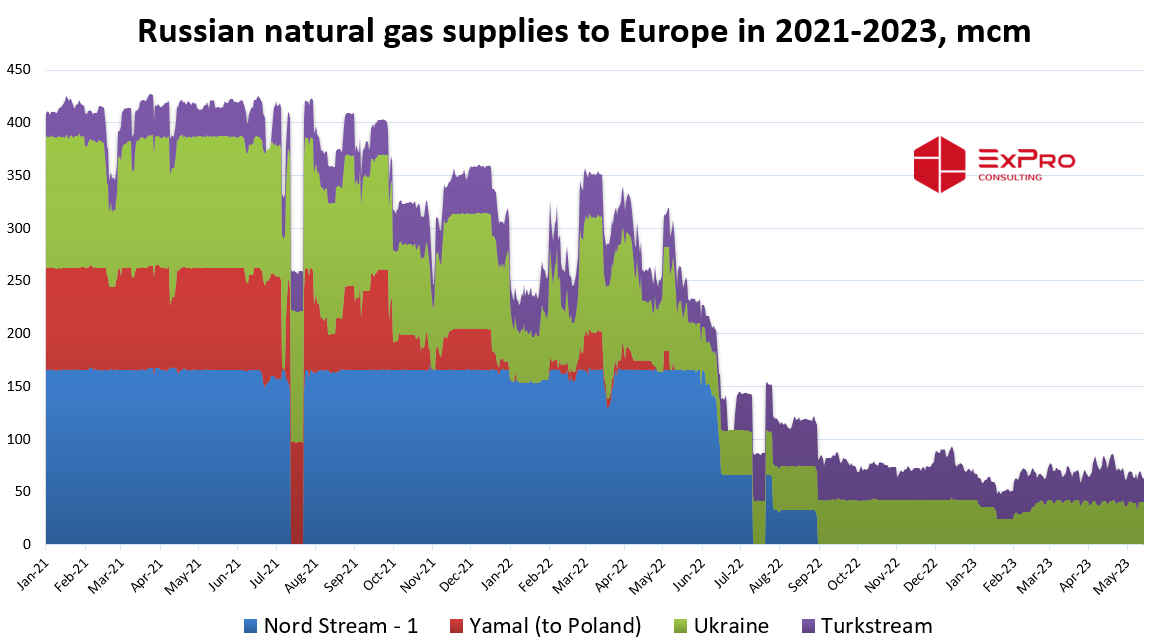
In 2022, Nord Stream deliveries to Germany amounted to about 29.7 bcm, which is 49% less than in 2021. The supply of gas was completely stopped on August 31, 2022, and later in September, explosions occurred on the lines of the Nord Stream 1 and Nord Stream 2 gas pipelines, as a result of which they became unfit for gas transportation.
According to the results of 2022, gas supplies through the Yamal-Europe gas pipeline to Poland decreased by almost 95% and amounted to about 1.4 bcm. In total, in 2022, Russia delivered 64 bcm of gas to Europe, which is 2.2 times less than in 2021.
Currently, Russia transports gas to Europe in two directions: transit through Ukraine and Turkish Stream. The average daily transit of gas through Ukraine in May is about 40 mcm, and deliveries via Turkish Stream to Bulgaria are about 27 mcm per day.
17:40 / 15 May 2023
Articles
11:16 / 2 January, 2026
Gas imports to Ukraine hit a five-year high at 6.5 bcm in 2025
10:29 / 16 July, 2025
Ukraine’s Recovery: Energy as a Priority
11:50 / 2 July, 2025
Ukraine boosts natural gas imports twelvefold
13:22 / 27 May, 2025
Gas prices in Ukraine surge: Highest level in over two years
13:17 / 26 May, 2025
Ukraine injects over 1 bcm of gas into storages
12:09 / 19 May, 2025
Special Issue: When Will Europe Switch to SDAC 15-minute intervals?
10:05 / 3 February, 2025
Special materials: Energy Mix of Neighbouring Countries in 2024: Coal, Nuclear, and the "Green" Path