Svitlana Hrynchuk – Ukraine’s New Minister of Energy
Svitlana Hrynchuk has been appointed Ukraine's Minister of Energy. The Verkhovna Rada voted in favor with 254 members supporting the decision during the session on July 17, 2025.
 Svitlana Hrynchuk
Hrynchuk is expected to focus on international collaboration and European integration within Ukraine’s energy sector.
She succeeds Herman Halushchenko, who has moved to serve as Minister of Justice.
About Svitlana Hrynchuk
Prior to her appointment on July 17, Hrynchuk served as Minister of Environmental Protection and Natural Resources. Before that, she was Deputy Minister of Energy, where she oversaw the development of national and regional strategies, state energy programs, and development plans Вікіпедія .
Her career began in 2008 at the Kyiv National University of Trade and Economics, working as a lecturer in the faculty of finance.
In 2015, she took a position as Chief Specialist in the Department for Life Safety, Environmental Protection, and Agro-Industrial Complex within the Cabinet secretariat. In 2016, Hrynchuk was appointed Director of the Department for Climate Change and Ozone Protection at the Ministry of Ecology and Natural Resources, where she actively contributed to implementing international climate agreements such as the Paris Agreement, and ensured Ukraine’s compliance with the Kyoto and Montreal Protocols.
In 2019, she became an advisor on environmental protection and climate change to the Prime Minister, and in 2020 she similarly advised the Ministry of Finance. In 2022, she became Deputy Minister of Environmental Protection and Natural Resources, responsible for European integration.
By September 2023, she moved to the Ministry of Energy.
About Herman Halushchenko
Halushchenko served as Ukraine’s Minister of Energy from 2021 to 2025—a period marked by immense challenges. Following Russia’s full-scale invasion, more than 50% of the country’s energy generation capacity was destroyed, damaged, or occupied. During the war, some of the most extensive repair campaigns in Ukrainian history were conducted, restoring 2.2 GW of generating capacity by 2025.
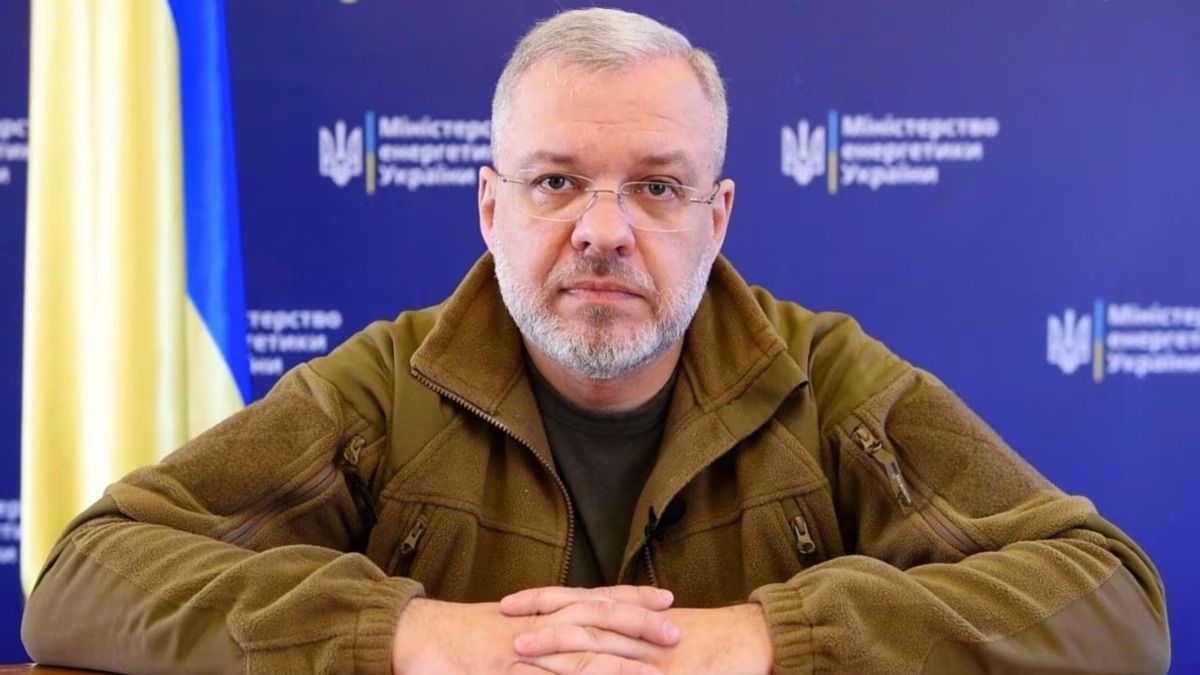
Herman Halushchenko
Ukraine's power system was synchronized with Europe’s ENTSO‑E in March 2022. Meanwhile, electricity imports and exports were enabled: import capacity reached 1.7 GW and export capacity reached 900 MW.
Under his leadership, nuclear energy became a priority: Ukraine signed agreements with the IAEA, Holtec, and Westinghouse to enhance safety, develop small modular reactors, and localize nuclear fuel production. Importantly, Ukraine completely eliminated reliance on Russian nuclear fuel, services, and parts.
In January 2025, Ukraine halted the transit of Russian gas. Gas storage facilities received EU certification, enabling the storage of up to 3 billion m³ of foreign gas. New supply routes via Poland, Norway, and Greece were expanded, and the Trans-Balkan gas corridor was activated. In addition, a legal framework was established to export biomethane to the European Union.
Ukraine also adopted various strategic documents for renewable energy: the Energy Strategy through 2050, the National Plan for Renewables Development through 2030, and a strategy for distributed generation through 2035. Over 1 GW of distributed generation has already been connected to the system
15:45 / 17 July 2025
Articles
11:16 / 2 January, 2026
Gas imports to Ukraine hit a five-year high at 6.5 bcm in 2025
10:29 / 16 July, 2025
Ukraine’s Recovery: Energy as a Priority
11:50 / 2 July, 2025
Ukraine boosts natural gas imports twelvefold
13:22 / 27 May, 2025
Gas prices in Ukraine surge: Highest level in over two years
13:17 / 26 May, 2025
Ukraine injects over 1 bcm of gas into storages
12:09 / 19 May, 2025
Special Issue: When Will Europe Switch to SDAC 15-minute intervals?
10:05 / 3 February, 2025
Special materials: Energy Mix of Neighbouring Countries in 2024: Coal, Nuclear, and the "Green" Path