


The last days of Russian natural gas transit through Ukraine are coming to an end, which continued despite the annexation of Crimea and military aggression in the East, as well as a full-scale invasion in 2022. ExPro summarizes the results of the last 5-year transit agreement, which expires on January 1, 2025.
Background
The history of natural gas transit to Europe through Ukraine dates back to the Soviet Union when Ukraine was an important part of the USSR's gas infrastructure. The first main gas pipelines designed for natural gas transit were built in 1970-1980, creating a network that ensured gas transit to Europe.
After the collapse of the USSR and the restoration of independence, Ukraine became a key transit route for Russian gas to Europe. From 1992 to 2008, 110-140 bcm of Russian gas were transported through Ukraine.
However, from 2000 to 2010, disputes between Ukraine and Russia frequently arose over transit tariffs, terms of supply, and debt payments. Even then, Russia used natural gas as a weapon, cutting off gas supplies several times to force Ukraine to negotiate on other issues.
One of the biggest conflicts was the 2006 gas crisis, when gas supplies to Ukraine were cut off due to disputes between the two countries, affecting transit to Europe. The biggest conflict occurred in 2009, when Russia suspended gas supplies through Ukraine for the second time at the beginning of the year, causing serious problems for European consumers. This incident became the basis for many reforms in European countries, which began diversifying their gas supply sources to reduce dependence on one route.
Stoppage of Russian gas supplies through Ukraine:
- January 2006
Period of stoppage: January 1-4, 2006.
The volume of transit per day before the shutdown: 360-380 mcm.
Reason for the shutdown: disagreement between Naftogaz of Ukraine and Gazprom over gas prices and transit tariffs. - January 2009
Period of shutdown: January 7-20, 2009.
Transit volume per day before the shutdown: 300-310 mcm.
Reason for the shutdown: unresolved issues between Ukraine and Russia regarding gas supply and transit terms led to the so-called “gas war”.

1991-2024 In the following years, Russia began building several bypass pipelines to reduce its dependence on the Ukrainian route and increase European countries' dependence on cheap Russian gas.
After Russia annexed Crimea in 2014 and the outbreak of the war in eastern Ukraine, relations between Ukraine and Russia naturally deteriorated, which was reflected in energy relations. Russia began actively developing new gas pipelines, such as the Nord Stream and South Stream, which bypassed Ukraine's territory. Russia also planned to launch Nord Stream 2 to completely eliminate the Ukrainian route, but although the pipeline was built, it was never implemented.
Prerequisites for concluding the contract in 2019
The previous 10-year contract for the transit of Russian natural gas through Ukraine was signed in 2009. It was signed after a serious gas crisis interrupted Europe's gas supplies. The contract contained tough conditions for Ukraine, including a take-or-pay principle and fixed transit volumes. The contract expired at the end of 2019.
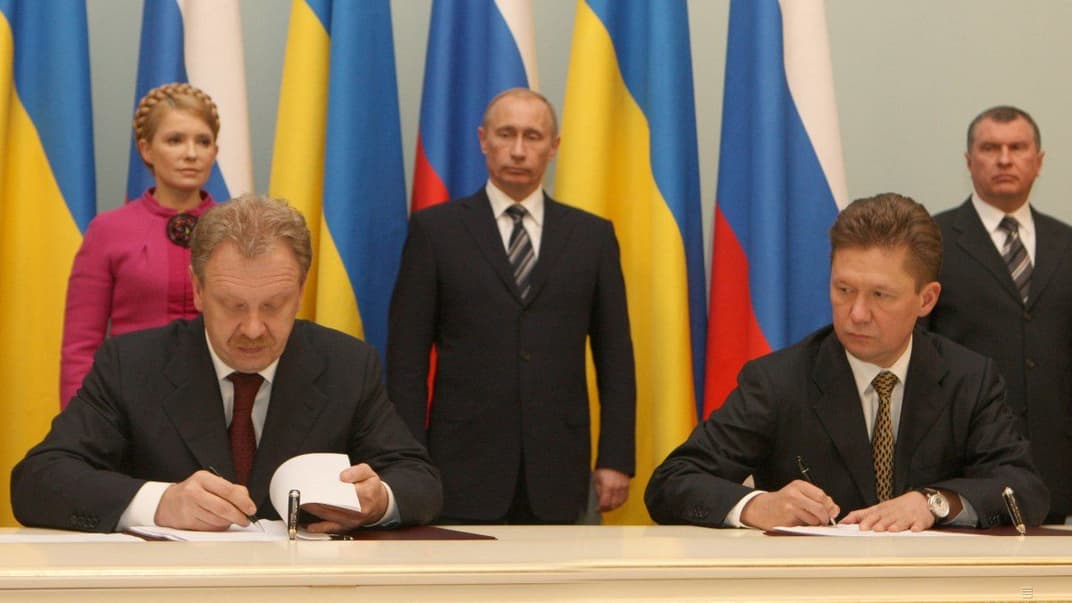
An important event that preceded the new contract was Naftogaz of Ukraine's victory in the Stockholm Arbitration in 2018 in a case against Russian Gazprom. The tribunal ordered Gazprom to pay Naftogaz compensation in the amount of $2.9 billion for breach of the transit contract. The victory in the arbitration significantly strengthened Ukraine's position in the ongoing negotiations.
The European Union acted as a mediator in the negotiations between Ukraine and Russia, as stable gas transit through Ukraine was important for the EU's energy security. In 2019, the United States also imposed sanctions on companies involved in constructing Nord Stream 2, which delayed its launch and forced Russia to continue using the Ukrainian gas transportation system.
According to former Naftogaz CEO Yuriy Vitrenko, who participated in the gas transit negotiations at the time, the key points were Germany's condition that Nord Stream 2 would not start working unless at least some gas volumes were transited through Ukraine and Russia's change of position after the Normandy format meeting.
Thus, on December 30, 2019, representatives of Naftogaz of Ukraine, GTS Operator of Ukraine LLC, and Russian Gazprom signed agreements in Vienna to continue the transit of Russian gas through Ukraine until 2024 inclusive.
Terms of the agreement
The documents signed in 2019 in Vienna include:
- The interconnection agreement between the Ukrainian GTS Operator (GTSOU) and Gazprom defines technical regulations and rules of interaction between operators of adjacent networks (interconnection agreement).
- The Transit Organization Agreement between Naftogaz and Gazprom sets out the terms and volumes of transit for five years.
- Settlement agreement between Naftogaz and Gazprom, according to which the parties waive their mutual claims under the 2009 contracts.
The signed agreements stipulated that Gazprom would pay $2.918 billion in compensation to comply with the Stockholm arbitration award. Naftogaz received these funds on December 27, 2019. The agreements also provided for the withdrawal of all arbitration lawsuits that have not been finalized, the lifting of arrests on Gazprom's property, assets, and funds, and the waiver of all possible claims and lawsuits under the January 2009 contracts in the future.
The minimum transit volumes by year are 2020 - 65 bcm and 2021-2024 - 40 bcm annually. Ukraine and Russia have switched to measuring gas in European units, and Gazprom submits applications for transportation in MWh rather than thousand cubic meters.
It is worth noting that the signed agreements did not address lawsuits filed by Naftogaz Group companies against Russia over the group's seized assets in the Autonomous Republic of Crimea. Already, the company has won an arbitration court case to recover $5 billion of illegally seized assets in Crimea from Russia.
The then head of Naftogaz, Andriy Kobolyev, admitted that Russia could violate the gas agreements but noted that the likelihood was not high.
“No one can give you a one hundred percent guarantee for any counterparty. However, the new transit agreement contains, firstly, European law, clearly defined guarantees, which are inherently very close to the concept of “ship or pay.” We consider the level of guarantees to be high, better than in previous contracts.”
The 2019-2024 contract was concluded on the principle of “ship or pay” (as opposed to “take or pay” in the previous contract). In fact, Gazprom is obliged to pay for the booked transit volumes regardless of the actual use of capacities.
Gas is measured at standard conditions, including a temperature of 20°C (not 0°C, as in most EU countries). Annex 3 to the contract sets out several key gas quality parameters: calorific value, content of mechanical impurities, and dew point temperature for water and hydrocarbons. If the gas entering the Ukrainian GTS does not meet these parameters, Gazprom must pay a fine, the calculation of which is based on the next month's NCG futures quotes multiplied by a factor of 1.7. During the contract years, there have been no reports of non-compliance with gas quality.
Naftogaz could unilaterally terminate the contract only in the event of a material breach of the contract by Gazprom, the only such breach being the failure to pay four consecutive monthly payments. Moreover, in this case, the customer is obliged to pay the organizer all unpaid monthly payments for the period from the date of termination of the agreement until January 1, 2025.
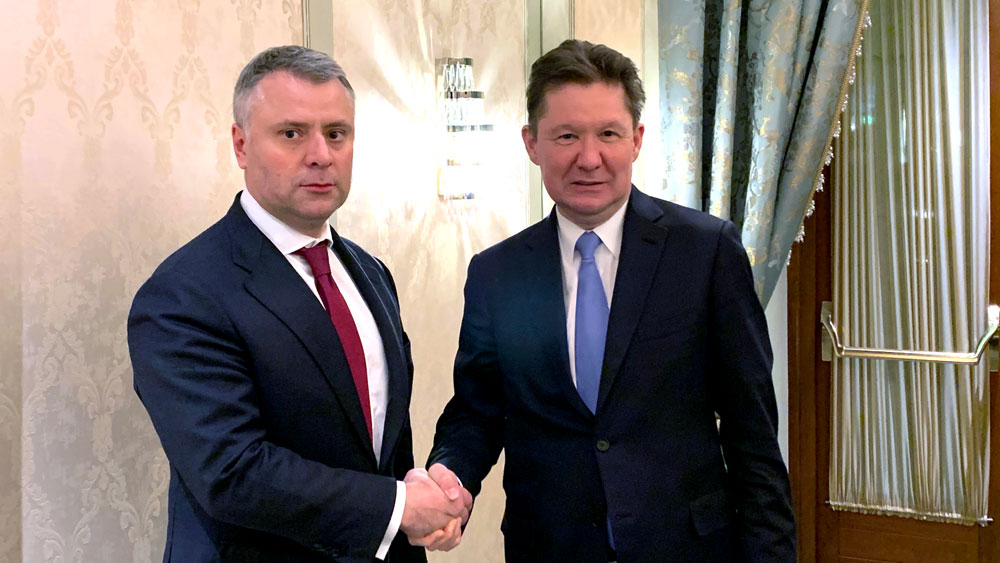
The contract, signed in the last days of 2019, was an important compromise in a difficult political and economic environment. For Ukraine, the contract provided a stable income from gas transit and confirmed the role of the Ukrainian gas transportation system in supplying gas to Europe despite Russia's attempts to bypass the Ukrainian route.
For Europe, the contract became a guarantee of energy stability in the region, which was, however, violated in 2021 when Russia artificially created an energy crisis in Europe and completely destroyed stability in 2022 after Russia's invasion of Ukraine.
For Russia, the contract allowed it to avoid new arbitration disputes and maintain the trust of European consumers. Russia has also continued to use natural gas as a weapon, blackmailing Europe by reducing gas supplies during certain periods.
Transit results
According to ExPro's calculations, Russia transported about 148 bcm of natural gas through Ukraine under the 5-year contract. This is almost 66% of the booked capacity under the long-term contract - 225 bcm. Although transit was less than the contracted capacity in most years, in 2021, transit volumes exceeded the planned volumes - 41.6 bcm instead of 40 bcm. Naftogaz booked additional capacity at short-term auctions of the GTSOU for Gazprom, which was more expensive.
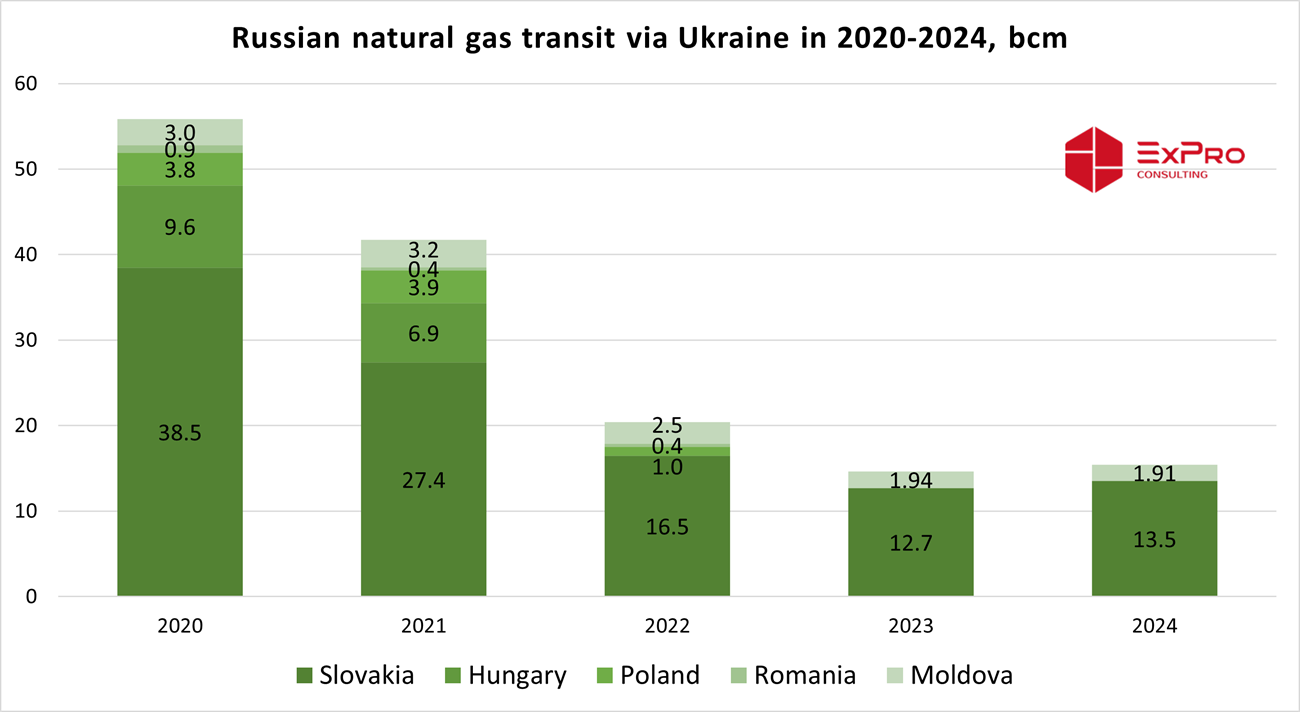
The lowest level of transit - 14.6 bcm - was recorded in 2023. Transit in 2023 fell to its lowest level since Ukraine's independence in 1991. However, in 2024, transit volumes increased by 5.7% to 15.4 bcm, the second lowest level since independence.
Russian natural gas has been transported through Ukraine to 5 countries since 2019. Most Russian gas was supplied through Ukraine to Slovakia during the 5-year contract period - 108.6 bcm or more than 73% of all supplies. Gas was also transported to Slovakia, Austria, Italy, and others.

Hungary received 16.5 bcm or 11% of supplies. It is worth noting that since October 1, 2021, Hungary has stopped receiving Russian gas through Ukraine, switching to a bypass route, primarily through the Turkish Stream.
Moldova became the third largest recipient of Russian gas under the contract - 12.6 bcm or 8.5% of all supplies. The bulk of Russian gas for Moldova went to the so-called Transnistria, where the main power plant that generates most of Moldova's electricity is located.
Russian gas supplies to Poland via Ukraine amounted to 8.5 billion cubic meters, or 5.5% of all supplies. Poland stopped buying Russian gas after Russia's invasion of Ukraine in early 2022.
In addition, about 1.7 bcm or 1.2% of Russian gas was supplied to Romania via Ukraine. Romania stopped receiving Russian gas from Ukraine on April 1, 2021, switching to the Turkish Stream, as did Hungary. At the beginning of 2022, Romania resumed gas supplies through Ukraine, but in May, the supplies stopped.
Thus, from May 2022 to the end of December 2024, Russian gas was supplied through the Ukrainian GTS to only two countries: Slovakia and Moldova.
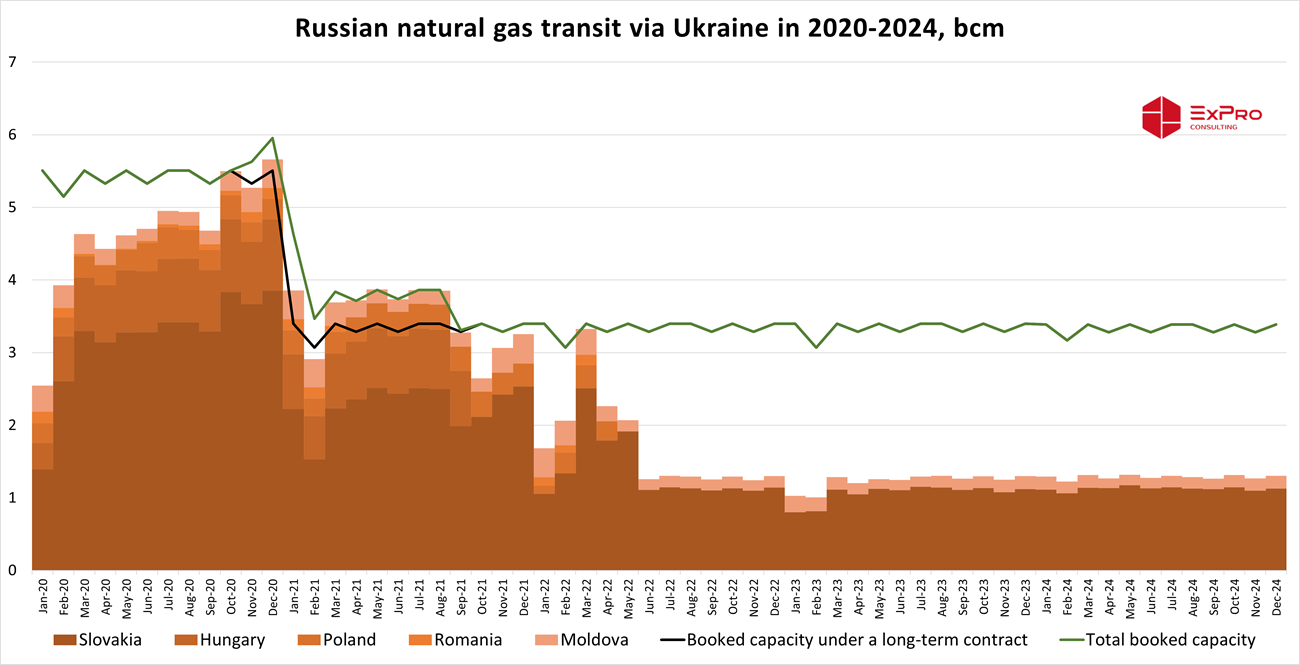
The volume of Russian gas transit through Ukraine in 2024 amounted to 15.4 bcm, of which 13.5 bcm were supplied to Slovakia, 6.5% more than in 2023. In addition, Moldova received 1.9 bcm of Russian gas, 1.8% less than in 2023.
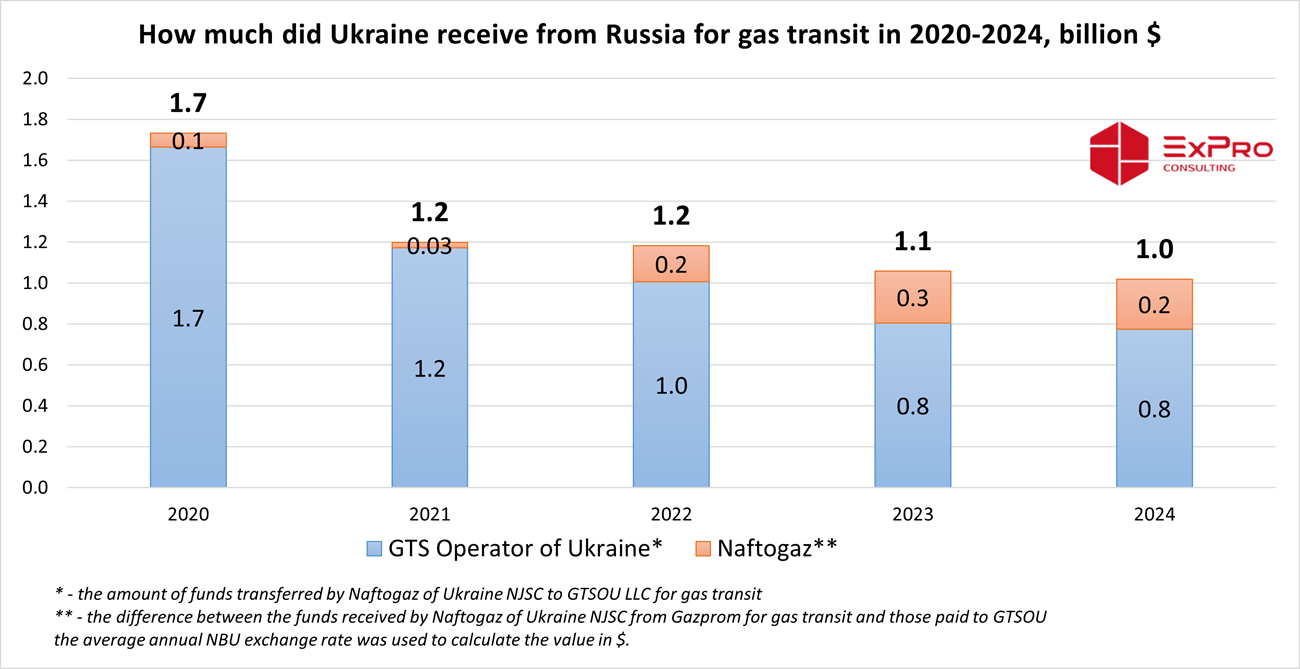
ExPro estimates that Ukraine received $6.2 billion from Russia for natural gas transit between 2019 and 2024. This is approximately the amount that Russian Gazprom paid to Ukraine's Naftogaz. In turn, Naftogaz paid about $5.4 billion to the Ukrainian GTS Operator for organizing transit.
In UAH terms, Ukraine has received about UAH 195 billion from Russia over the contract's life. Russia paid the most in 2020 — more than $1.7 billion, due to the higher volumes of booked capacity.
It is worth noting that as a result of the occupation of the Luhansk region, Ukraine temporarily lost access to the Sohranivka gas metering station, one of two entry points to the Ukrainian GTS through which Russian gas entered the system. Russia refused to transfer transit volumes to another point, Sudzha and reduced transit fees. In this regard, Naftogaz of Ukraine applied to international arbitration.
Initially, Naftogaz demanded $150 million in unpaid fees for the booked capacity. In early 2024, Naftogaz increased the amount of its claim to $843 million and reiterated that “due to Gazprom's ongoing violation of the Agreement, the Company reserves the right to increase its claims until the end of the case and, accordingly, the expiration of the Agreement in January 2025.” As of the end of September 2024, Gazprom's accounts receivable for natural gas transportation services amounted to UAH 41.9 billion or more than $1 billion.
The impact of a full-scale war
Ukraine continued to transport Russian natural gas despite Russia's full-scale invasion on February 24, 2022. According to Yuriy Vitrenko, the then head of Naftogaz, the transit was not stopped at the request of Western partner countries.
“The EU and the US asked Ukraine not to do so. At that time, the energy crisis was raging in Europe, and gas prices were at record highs. It would have been difficult for us to get the support we got if we had stopped transit,” Vitrenko said in a recent interview with Forbes.
Later, the next head of Naftogaz, Oleksiy Chernyshov, also mentioned the dependence on Russian gas of European countries that support Ukraine in its war with Russia as a reason for continuing transit.
Nevertheless, the impact of a full-scale invasion on Russian-Ukrainian gas relations is significant. First, the occupation of part of the Luhansk region in 2022 led to the GTSOU declaring force majeure at the Sohranivka entry point for Russian gas to Ukraine, which reduced Russian gas supplies.
In addition, European countries that in previous years relied on Russian gas have begun gradually abandoning energy from Russia. Most European countries no longer buy pipeline gas directly from Russia, but some of Ukraine's neighbors, especially Slovakia, remain important consumers of Russian gas.
The future of transit
As the last year of the current contract began, some reports about the potential future of Ukrainian natural gas transit began to emerge. Already in the first months of the year, Slovak Prime Minister Robert Fico, who had been one of the key figures in gas transit throughout the year, met with Ukrainian Prime Minister Denys Shmyhal. Following the meeting, Fico said that Ukraine was allegedly ready to allow Russian gas to be transported through its territory after 2024. In response, the Ukrainian Cabinet of Ministers said that it would not extend the contract for the transit of Russian gas but that Ukraine could talk about using its own gas transportation system with the EU.
In March, The European Commission said that it did not intend to participate in any negotiations on natural gas transit through Ukraine after the current agreement expires. The EC recommended that European countries refuse to buy Russian gas.
Toward the middle of the year, it was reported that European countries were negotiating to continue natural gas supplies through Ukraine. According to Bloomberg, the option being considered then was to transport Azerbaijani gas instead of Russian.
Over the following months, more details emerged about the Azerbaijani gas transportation option. It is clear that Azerbaijan does not have sufficient spare natural gas capacities, so the natural gas would remain Russian physically. A potential transportation scheme involved a “swap,” through which Russian gas would be virtually delivered to Azerbaijan, and Azerbaijani gas would be delivered to the Ukrainian-Russian border.
In the fall, talk of Azerbaijani gas transportation became noticeably quieter, suggesting that negotiations with Azerbaijan had stopped. It was reported that the main focus was on the results of the US elections, which could affect the continuation or suspension of gas transit through Ukraine.
Various media reported other options for gas transportation, including foreign companies buying gas at the Ukrainian-Russian border (Russian or Azerbaijani gas). This gas would then be pumped into Ukrainian UGS facilities and later exported from storage to European countries. Slovak SPP and Hungarian MOL were among the European companies that could buy gas at the border.
News about potential agreements to continue natural gas transit through Ukraine significantly impacted the European market, although the news was false in all cases. For example, on October 31, Bloomberg published information that European companies were close to signing an agreement with Azerbaijan on gas supplies through Ukraine, which caused natural gas prices in Europe to drop by 7%.
In December, the issue of natural gas transit through Ukraine became one of the most important in the European gas market. In early December, Ukraine's Energy Minister Herman Galushchenko said that Ukraine was preparing to stop the transit of Russian gas on January 1, a preparation that had been underway for a long time.
The European Union and most European countries are ready to end Russian gas supplies through Ukraine. On the other hand, Slovakia is actively promoting the idea of continuing the transit of Russian gas. On December 16, Slovak Prime Minister Robert Fico met with Ukrainian Prime Minister Denys Shmyhal to discuss the transit issue.
Following the meeting, Shmyhal said that Ukraine is ready to consider transit of any gas other than Russian gas if the European Commission officially requests it. Slovak, Hungarian, Austrian, and Italian companies and associations signed a declaration supporting gas transit through Ukraine and calling on the European Commission to facilitate it.
In addition, Moldova's situation in the energy sector may be difficult. Moldova receives most of its electricity from the Moldovan thermal power plant located in the so-called Transnistria and operates on Russian gas coming through Ukraine. Moldova has already introduced a state of emergency in the energy sector since December 16 and accuses Gazprom of provoking the energy crisis.
On December 19, Russian President Putin said that there would be no agreement on the transit of Russian gas through Ukraine, as Ukraine had rejected such proposals. In turn, Ukrainian President Volodymyr Zelenskyy said that Ukraine was not ready to transport Russian gas and continued to sponsor Russia. At the same time, Zelenskyy noted that Ukraine could consider transiting non-Russian gas if the country buying the gas does not pay Russia until the war is over.
Slovak Prime Minister Fico visited Russia on December 22 to meet with Putin to discuss natural gas transit. Ukraine, Europe, and the Slovak opposition criticized Fico for his actions. No agreements on gas supplies were likely to be reached during this visit.
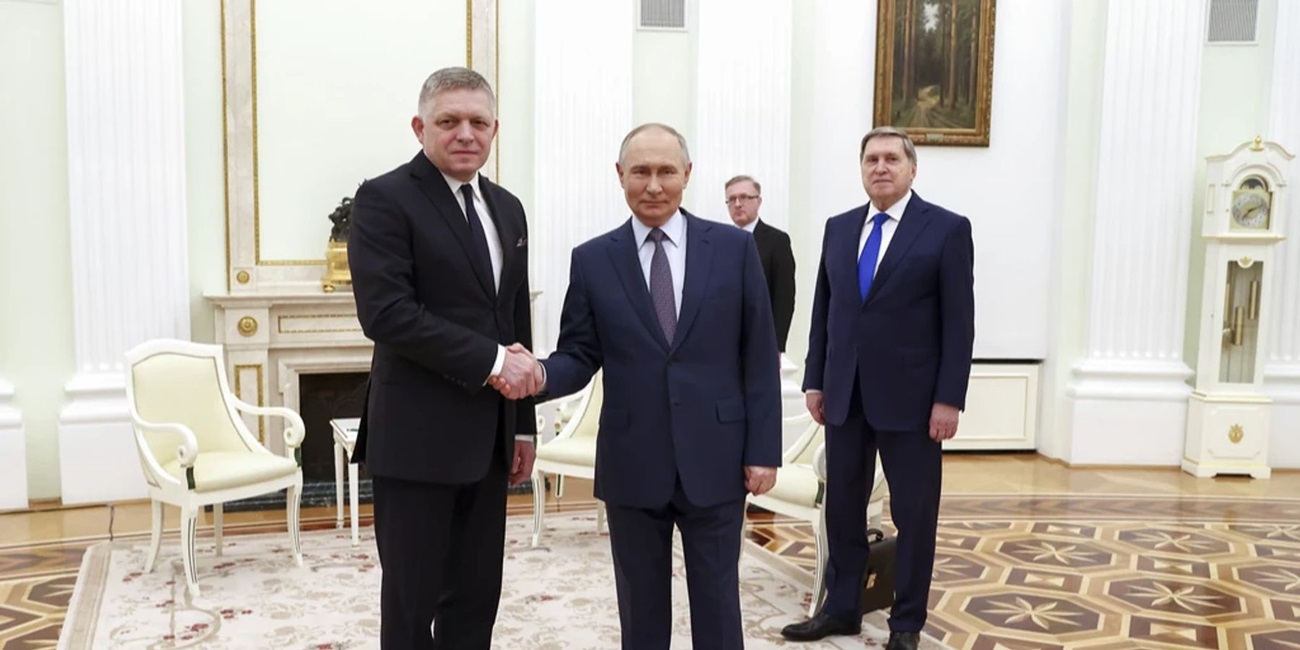
On December 27, Robert Fico threatened to cut off electricity supplies to Ukraine on January 1, 2025, if Ukraine stopped transiting natural gas.
“If this is inevitable, we will stop supplying the electricity Ukraine needs during blackouts. Or we will agree on another course of action,” Fico said.
Ukraine promptly responded to Fico's statements, saying that Ukraine's need for electricity imports arose only because of Russia's occupation of our Zaporizhzhya nuclear power plant and the deliberate destruction of a significant part of Ukraine's thermal and hydroelectric power generation by Russian missiles and “Shaheds.” Ukraine also pays for imported electricity, including emergency aid.
Another confirmation of the completion of transit was Gazprom's announcement on December 28 that it would stop supplying Russian gas to Moldova as of January 1, allegedly because the Moldovan side refused to settle its debt for natural gas.
Ukraine will stop transiting Russian gas on January 1, 2025, given the expiration of the current agreement signed in 2019. At the same time, it cannot be ruled out that after a certain period of no transit, at the request of European countries, Ukraine may consider resuming transit of non-Russian gas.
For a more detailed analysis of natural gas transit through Ukraine, as well as other indicators of the Ukrainian gas market balance (production, consumption, imports, exports, UGS) and natural gas prices, please read the ExPro publications available by subscription: ExPro Daily Gas, ExPro Gas&Oil Weekly, and ExPro Gas&Oil Monthly.
Михайло Свищо